|
|
|
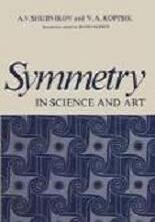
Symmetry in Science and Art
|

(Buch) |
Dieser Artikel gilt, aufgrund seiner Grösse, beim Versand als 2 Artikel!
| Lieferstatus: |
 i.d.R. innert 5-10 Tagen versandfertig i.d.R. innert 5-10 Tagen versandfertig |
| Veröffentlichung: |
März 2012
|
| Genre: |
Soziologie |
| ISBN: |
9781468420692 |
|
EAN-Code:
|
9781468420692 |
| Verlag: |
Springer-Verlag New York Inc. |
| Einband: |
Kartoniert |
| Sprache: |
English
|
| Dimensionen: |
H 229 mm / B 152 mm / D 0 mm |
| Gewicht: |
669 gr |
| Seiten: |
420 |
| Illustration: |
34 Illustrations, color; 409 Illustrations, black and white |
| Bewertung: |
Titel bewerten / Meinung schreiben
|
| Inhalt: |
| The perception of symmetry in art and in nature has been appreciated since antiquity, with development of the underlying laws tracing back at least to Pythagorean times. By the end of the eighteenth century it was realized that the immense variety of natural crystal shapes could be accounted for on the basis of a rather small number of symmetry operations, of which some were equally applicable to biological systems. The mathematical theory of symmetry continued to mature throughout the last century, culminating in the independent discoveries in Russia, Germany, and England that a total of only 230 independent ways exist in which the operations of rotation, reflection, and translation can be combined to transform three-dimensional geometrical objects into themselves. Derivation of the 230 space groups depends ultimately on restricting the meaning of symmetry to that of a property of purely geometrical figures. A. V. Shubnikov and his collaborators, over the past three decades, expanded this concept of symmetry to include the sign of transformation operations. |
|











 Newsfeed |
  Facebook |
  Twitter