|
|
|
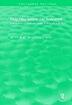
Planar Straight-Line Graph: Computational Geometry, Graph Embedding
|

(Buch) |
Dieser Artikel gilt, aufgrund seiner Grösse, beim Versand als 2 Artikel!
| Lieferstatus: |
 i.d.R. innert 7-14 Tagen versandfertig i.d.R. innert 7-14 Tagen versandfertig |
| Veröffentlichung: |
März 2026
|
| Genre: |
Schulbücher |
| ISBN: |
9786131296499 |
|
EAN-Code:
|
9786131296499 |
| Verlag: |
Omniscriptum |
| Einband: |
Kartoniert |
| Sprache: |
English
|
| Dimensionen: |
H 220 mm / B 150 mm / D 7 mm |
| Gewicht: |
173 gr |
| Seiten: |
104 |
| Bewertung: |
Titel bewerten / Meinung schreiben
|
| Inhalt: |
| Please note that the content of this book primarily consists of articles
available from Wikipedia or other free sources online. Planar
straight-line graph (PSLG) is a term used in computational geometry for
an embedding of a planar graph in the plane such that its edges are
mapped into straight line segments. Fáry's theorem (1948) states that
every planar graph has this kind of embedding. In computational geometry
PSLGs have often been called planar subdivisions, with an assumption or
assertion that subdivisions are polygonal. A PSLG without vertices of
degree 1 defines a subdivision of the plane into polygonal regions and
vice versa. The absence of vertices of degree 1 simplifies descriptions
of various algorithms, but it is not essential. PSLGs may serve as
representations of various maps, e.g., geographical maps in geographical
information systems. Special cases of PSLGs are triangulations (polygon
triangulation, point set triangulation). Point set triangulations are
maximal PSLGs in the sense that it is impossible to add straight edges
to them. Triangulations have numerous applications in various areas. |
|











 Newsfeed |
  Facebook |
  Twitter