|
|
|
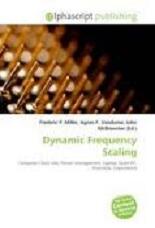
Dynamic Frequency Scaling: Computer Clock rate, Power management, Laptop, Quiet PC, Overclock, Capacitance
|

(Buch) |
Dieser Artikel gilt, aufgrund seiner Grösse, beim Versand als 2 Artikel!
| Inhalt: |
| Please note that the content of this book primarily consists of articles
available from Wikipedia or other free sources online. Dynamic frequency
scaling is a technique in computer architecture whereby the frequency of
a microprocessor can be automatically adjusted "on-the-fly", either to
conserve power or to reduce the amount of heat generated by the chip.
Dynamic frequency scaling is commonly used in laptops and other mobile
devices, where energy comes from a battery and thus is limited. It is
also used in quiet computing settings and to decrease energy and cooling
costs for lightly loaded machines. Less heat output, in turn, allows the
system cooling fans to be throttled down or turned off, reducing noise
levels and further decreasing power consumption. It is also used for
reducing heat in insufficiently cooled systems when the temperature
reaches a certain threshold, such as in poorly cooled overclocked
systems. The dynamic power dissipated by a chip is C·V2·f, where C is
the capacitance being switched per clock cycle, V is voltage, and f is
the switching frequency. As frequency changes, the dynamic power will
change linearly with it. |
|





 i.d.R. innert 7-14 Tagen versandfertig





 Newsfeed |
  Facebook |
  Twitter